Plan, Pass, Explore: Your N5 Journey in Three Pictures
計画・合格・旅行(けいかく・ごうかく・りょかく)
Every learner who eventually holds an N5 certificate has done the same three things in the same order: made a plan, sat an exam, and then let Japan become more than a wallpaper. Three pictures — a tracker, a result, a travel checklist — tell that whole story. This article walks through all three, with the vocabulary hiding inside each one.
Picture one: the plan
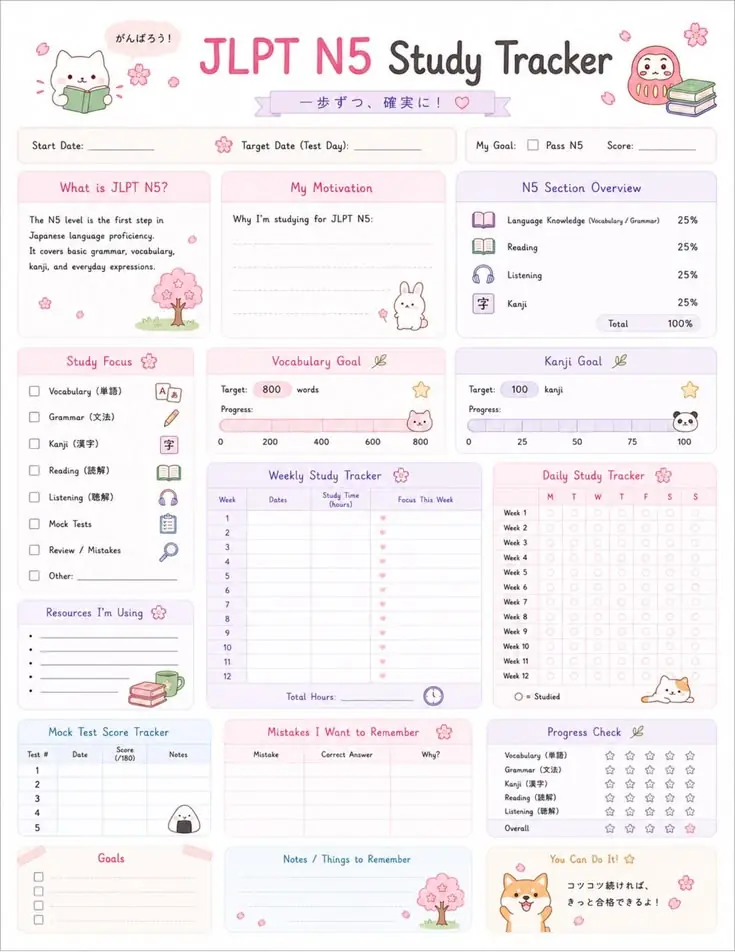
Motivation gets you started; a tracker keeps you started. This sheet turns a vague dream — "I want to pass N5" — into boxes: write your start date, write your test day, choose your goal (pass, or a target score), then fill a little square every time you actually study. The bottom of the page even has a mascot reminding you why: コツコツ続ければ、きっと合格できるよ — "keep at it little by little, and you will surely pass."
The numbers on the sheet are the official shape of the exam. Around 800 vocabulary words, around 100 kanji, four areas that each make up a quarter of the test, and five full mock tests before the big day. If you are using this site, you already have the matching pieces: a study plan for the dates, a roadmap for the order, mock exams for the score table, and a review deck for the mistakes box. The tracker is just where you watch it all happen.
Words for making a plan
- 計画けいかくplan, project
計画を立てる (たてる) — to make a plan. First word of every study schedule ever written.
- 目標もくひょうgoal, target
目 (eye) + 標 (mark) — the mark your eyes stay fixed on. Pass N5 is a 標.
- 単語たんごvocabulary word
単語帳 (たんごちょう) — a word notebook. The 800-word goal lives here.
- 復習ふくしゅうreview, revision
Do 復習 before you forget — that is spaced repetition, and it is what the review deck does.
Picture two: the result
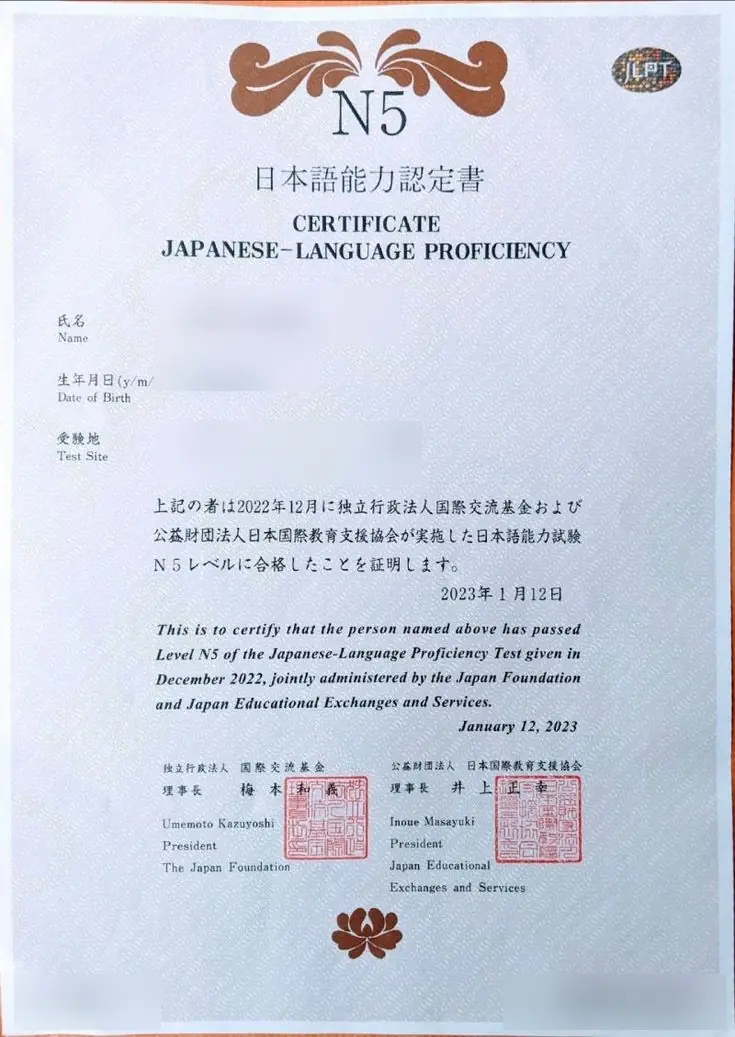
This is the moment the tracker is aimed at. The document reads 日本語能力認定書 — a certificate of Japanese-language proficiency — and the sentence underneath is the one every learner dreams of reading: 上記の者は…N5レベルに合格したことを証します. "The person named above is hereby certified to have passed Level N5." 合格した (ごうかくした) — passed. Two little characters that end months of effort.
How the result actually works: the test has three scored sections, each marked out of 60, for a total of 180 points. To pass N5 you need 80 out of 180 overall, plus a minimum score in every section — so you cannot ride one strong area while leaving another empty. Results come out about a month after test day: this certificate is dated January 12, 2023 for a December 2022 sitting, which is exactly the usual rhythm. Alongside the certificate you get a score report showing your scaled score per section.
Words for exam day and after
- 合格ごうかくpassing (an exam)
合格する — to pass; 合格でした — I passed. Opposite: 不合格 (ふごうかく), fail.
- 試験しけんexam, test
受験する (じゅけんする) — to sit/take an exam. 受験料 = the exam fee.
- 結果けっかresult, outcome
結果発表 (はっぴょう) — result announcement. The words everyone refreshes for in January.
- 認定書にんていしょcertificate, certification
認 (みとめる, acknowledge) + 定 (さだめる) + 書 (しょ, document) — the paper that says it is official.
Picture three: the trip
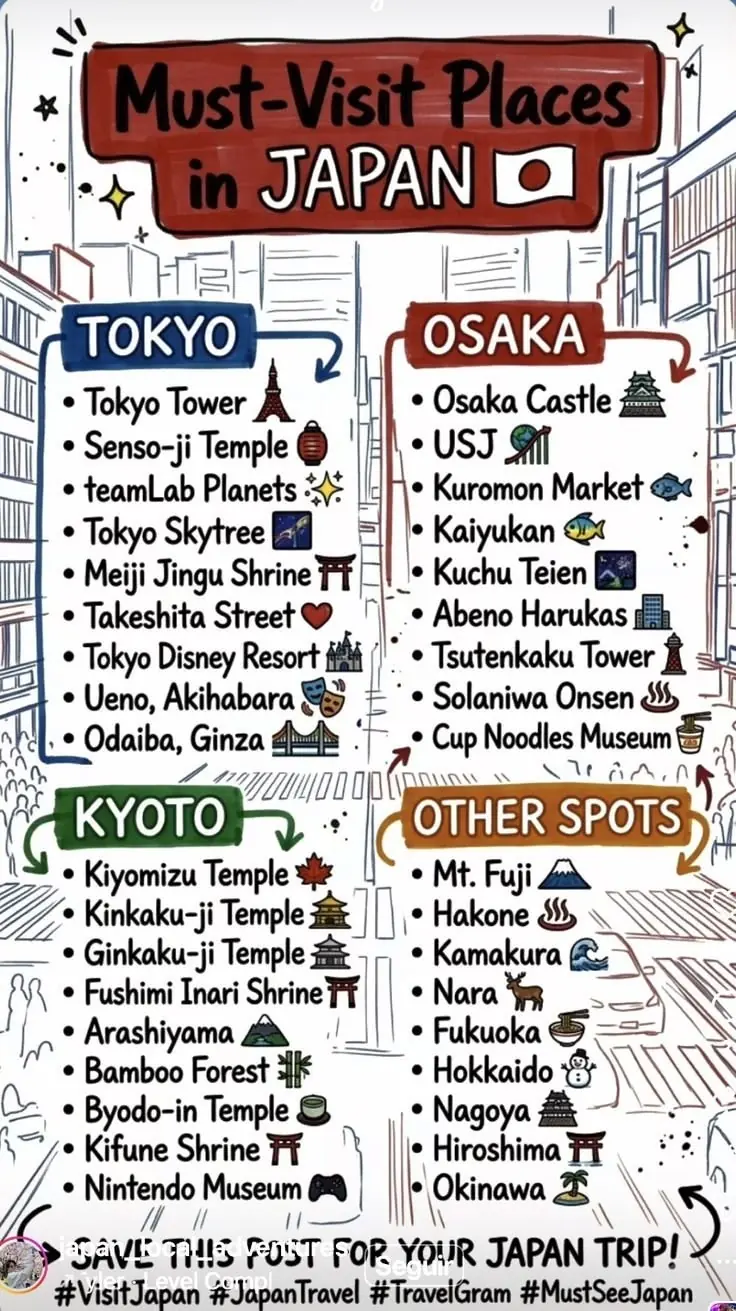
Now the fun one. The checklist splits Japan into four boxes — Tokyo, Osaka, Kyoto and Other Spots — and every entry is a place you will recognise from your first months of study: 浅草寺 (Senso-ji), 東京スカイツリー (Tokyo Skytree), 大阪城 (Osaka Castle), 伏見稲荷大社 (Fushimi Inari), 京都 (Kyoto), and of course 富士山 (Mount Fuji) over in the Other Spots column.
Here is what changes after N5: at a station you can read which train is yours, on a menu you can tell the ramen from the rice set, in a shrine you can sound out the ema plaque, and when someone asks どこまで行きますか you can answer. You are not decoding Japan letter by letter anymore — you are moving through it. That is the entire trade: twelve quiet weeks of kanji for years of reading the country with your own eyes.
Words for the trip
- 観光かんこうsightseeing
観光地 (かんこうち) — a tourist spot. The four boxes on this checklist are pure 観光.
- 旅行りょかくtrip, travel
旅行する — to go on a trip. 旅行の計画 — a travel plan. Same 計画 as your study plan.
- 名所めいしょfamous place, landmark
名所めぐり — a tour of famous places. 名 (name) + 所 (place): a place with a name.
- 切符きっぷticket
電車の切符 (でんしゃのきっぷ) — train ticket. Small word, big relief at the machine.
Study for the certificate, travel for the country — and read every sign on the way there.
The three pictures are one picture
Look at them together and the sequence is obvious. The tracker is the quiet part: dates, checkboxes, a mistakes list nobody else will ever see. The certificate is the short part: one date in January and a sentence in formal Japanese. The travel list is the long part: years of trips that keep getting easier because the language stays with you.
You do not have to wait for all three. Open the study plan today, set your target date, and take the first checkbox — the rest of the story is already written in the order of these pictures. 計画、合格、旅行。Plan, pass, explore.
✍️ Try it yourself
Pick your test date right now and write it somewhere you will see it daily — then open the study plan and do the first 15 minutes. One checkbox today is how every certificate starts.