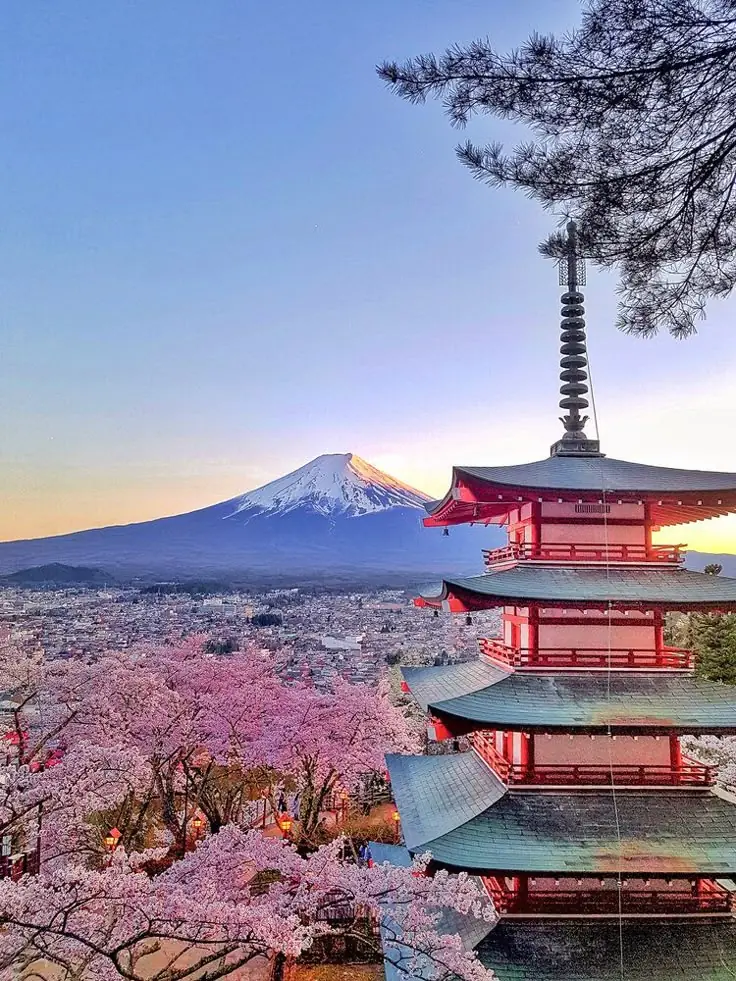
Peace in Japan is rarely dramatic. It does not arrive with fanfare. It is a pagoda turning red in the last light of the day, a bicycle left at the side of a road, the sound of gravel under your shoes at a shrine. These four photographs are ordinary postcards — and that is exactly why they matter. They show the Japan you actually meet once the suitcase is unpacked and the train map is folded away.
The mountain that everybody photographs
Mount Fuji has been painted, photographed and prayed to for centuries, yet it never looks the same twice. In this frame it wears a clean cap of snow while the sky behind it drifts from gold to lavender. The five-storied pagoda in the foreground belongs to Arakurayama Sengen Shrine, and the cherry trees around it only hold their blossoms for about ten days a year.
Japanese people have a word for this: 一期一会 (いちごいっえい), literally "one meeting, one time." It means that a moment like this will never come again in exactly this form, so you should meet it fully while you can. It is a good word to carry into your study sessions too — this page, this hour, this attempt at a grammar point will not repeat itself.
Words from this view
- 富士山ふじさんMount Fuji
Japan's highest peak at 3,776 m. Note that 山 reads さん here, not やま.
- 桜さくらcherry blossom
The flower of spring and of new beginnings — school and company years start in April.
- 五重塔ごじゅうとうfive-storied pagoda
A Buddhist tower with five roofs. 重 reads じゅう in this compound.
- お寺おてらBuddhist temple
Don't confuse 寺 (てら, temple) with 社 (やしろ, shrine). One is Buddhist, one is Shinto.
A street with nobody on it
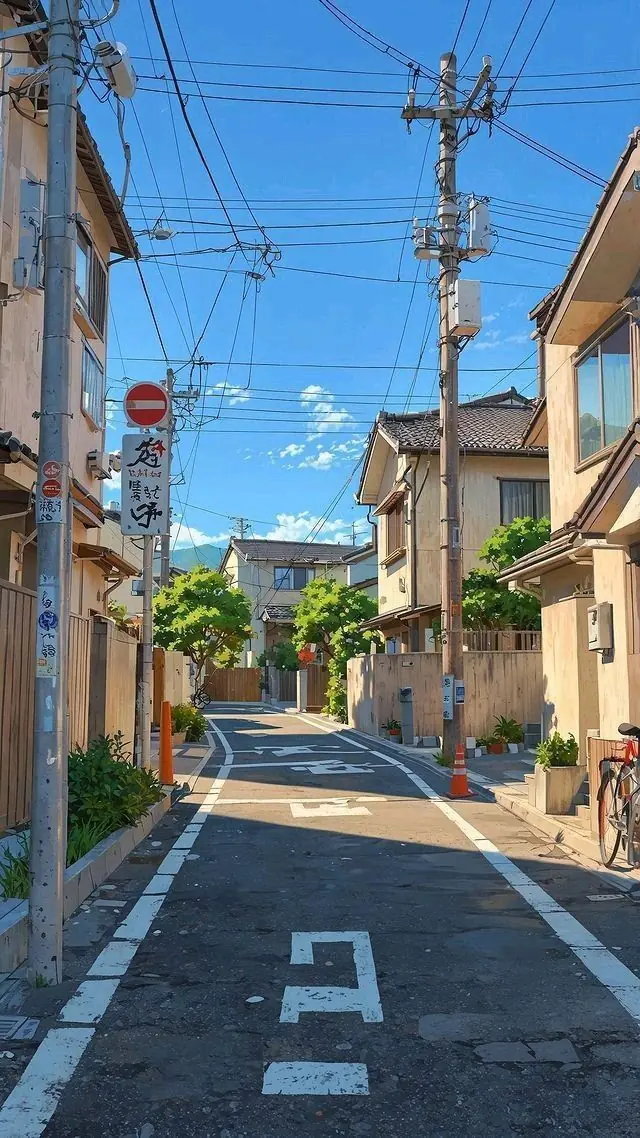
This is not a tourist spot. It is a normal neighbourhood street: power lines overhead, a 二輪車禁止 sign, a bicycle resting against a wall, hydrangeas still wet from watering. Nothing to see — and that is the point. Japanese residential areas are famously quiet because the culture treats the street as shared space rather than private ground.
Look at the road markings. The white characters painted on the asphalt are instructions for drivers, but they are written in hiragana and katakana that you already know how to read. Real-world Japanese is everywhere once you start looking for it: on signs, on road surfaces, on the backs of delivery vans.
Words from this street
- 道みちroad, way, path
A very common N5 word. 街道 (かいどう) means "highway/street."
- 静かしずかquiet, calm
A な-adjective: 静かな町 (a quiet town), 静かです (it is quiet).
- 自転車じてんしゃbicycle
電車 (でんしゃ, train) + 自 (自己) — a "self-turning vehicle."
- 空そらsky
On a clear summer day you will hear 晴れ (はれ, sunny weather) on the news.
The shrine at the end of the path
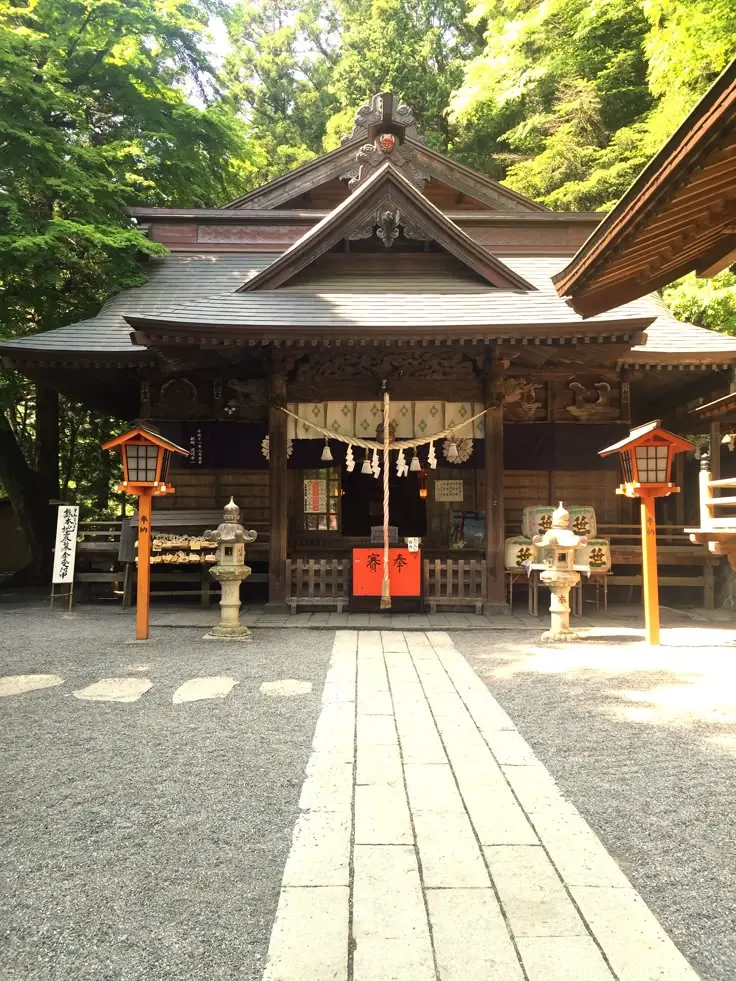
Every Japanese neighbourhood has a 神社, usually smaller than the one in this photograph, usually so quiet you might walk past it. The white rope across the entrance marks the boundary between ordinary ground and sacred ground. The bell is rung to announce your arrival before you clap twice and make a wish.
The gravel path is deliberate. Walking on it makes a sound, and the sound tells you that you are leaving the hurry of the day behind. Forests around shrines are called 鎮守の森 (ちんじゅのもり) — the guardian grove — which is why old shrines are almost always the greenest spots in town.
In the middle of ordinary places, Japan keeps its quietest rooms.
Water, mountain, blossom
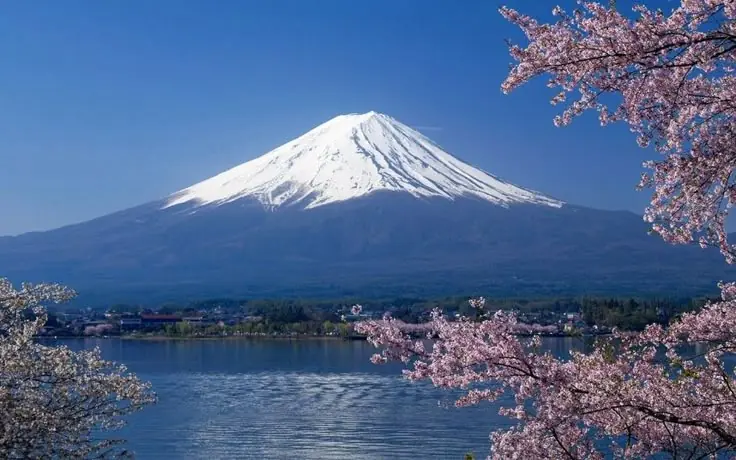
This is the last postcard, and maybe the calmest: Fuji across the lake, cherry branches leaning into the frame, a town going about its morning on the far shore. In the space of one afternoon these four views took us from sunset on a pagoda to a summer street, a forest shrine and a spring morning — which is roughly the emotional range of Japan itself.
You do not need a plane ticket to visit any of them. Vocabulary cards, a reading passage, an anime episode with the sound down — every one of those is a small doorway into the same world. Learn the words, and the pictures start speaking back.
Words from the lake
- 湖みずうみlake
口 + 水 — picture water held in a mouth. Famous lake: 湖 (こ) in compounds like 富士五湖.
- 山やまmountain
One of the very first kanji learned. In compounds it often shifts to サン: 山脈 (さんみゃく).
- 花はなflower
Meaning "snow" too: 花が降る (はながふる) — it is snowing.
- 広いひろいwide, spacious
い-adjective. 広い空 — a wide-open sky, exactly this photo.
✍️ Try it yourself
Next time you see a quiet Japanese scene — in a photo, a game, a film — stop and name three things in it. That habit is reading practice in disguise, and it costs nothing.